Red Snapper Livornese

Red Snapper Livornese
I started The Italian Chef website in 1999 and Red Snapper Livornese was one of the first recipes I posted. Occasionally, I like to revisit some of the older recipes from the archives, and since this wonderfully pungent dish from Livorno on the coast of Tuscany is the main course for my Christmas Eve fish dinner every year, this is the perfect time to bring it front and center.

We spend Christmas Eve with my wife, Sandy’s family. They are Portuguese and their tradition is to have octopus, something I can’t eat due to allergies. So, my first Christmas Eve dinner at my mother in-laws, I made a platter of Snapper Livornese to serve alongside the octopus. It was a big hit, and is now expected of me and we have been enjoying this hybrid Portuguese/Italian Christmas Eve fish dinner ever since.

This dish could also be one component in a traditional Feast of The Seven Fishes blowout, if you want some more ideas to go along with it, please check out my cousin Sal’s Christmas Eve Dinner menu.

Red Snapper Livornese Recipe

Serves 4

2 tablespoons extra-virgin olive oil
1 small yellow onion, diced
12 gaetta olives, pitted and chopped
2 tablespoons capers
4 Red Snapper fillets
1 cup marinara sauce
1 cup dry white wine
salt and freshly ground black pepper to taste

  1. Preheat the oven to 350°F.
  2. Heat the olive oil in a saute pan large enough to hold the snapper fillets, over medium heat. Add the onion and cook until it starts to soften, about 5 minutes. Add the olives and capers and continue cooking until onion is translucent 3-5 minutes.
  3. Lay the red snapper fillets skin side down in the pan, and add the marinara sauce and white wine. Season with salt and pepper to taste, and place the pan in the oven.
  4. Bake in the oven until fish is cooked through, about 15-20 minutes. Using a spatula, carefully transfer fish to serving plates, spoon sauce over fish and serve.
Read More

Porchetta

Porchetta
In Italy, Porchetta is a deboned pig, stuffed and rolled, and there are many versions depending on the region. I wanted to make Porchetta, but was not quite up to deboning and stuffing a pig, so I decided to do what you might consider “Porchetta Lite”. After doing some searching through recipe books and on the interwebs to see what other people have done, I saw a few variations. Some used pork loin, some pork shoulder, some pork belly. I even came across a few that used pork loin wrapped in pork belly! Again, that seemed like a bit of overkill to me. I figured Pork belly suffed with some Tuscan inspired herbs and garlic and rolled up would make for a delicious and easy porchetta in a home oven. I was right, it turned out great.


Porchetta Recipe

Serves 8

4 lb boneless pork belly, with the skin on
2 tablespoons fresh sage, chopped
2 tablespoons fresh rosemary, chopped
4 cloves fresh garlic, minced
2 teaspoons coarse salt
2 tablespoons extra-virgin olive oil, plus extra for drizzling
salt and freshly ground black pepper

  1. Preheat the oven to 350°F.
  2. Lay the pork skin side down on a work surface, and with a sharp knife, make a few slits in the flesh.
  3. In a small bowl, mix together the sage, rosemary, garlic, 2 teaspoons of salt and 2 tablespoons of olive oil. Spread the mixture all over the exposed surface of the belly, working it into the cuts in the flesh. Roll up the pork belly and tie tightly with butcher’s twine.
  4. Place rolled and tied belly in a roasting pan. Make some cuts in the skin with a sharp knife, drizzle with olive oil and season with salt and freshly ground black pepper to taste.
  5. Place the pan in the oven and cook for 2 1/2 hours. The juices should run clear when pierced with a knife. Remove from oven and allow to rest for 15 minutes, loosely tented with foil. Slice and serve.
Read More

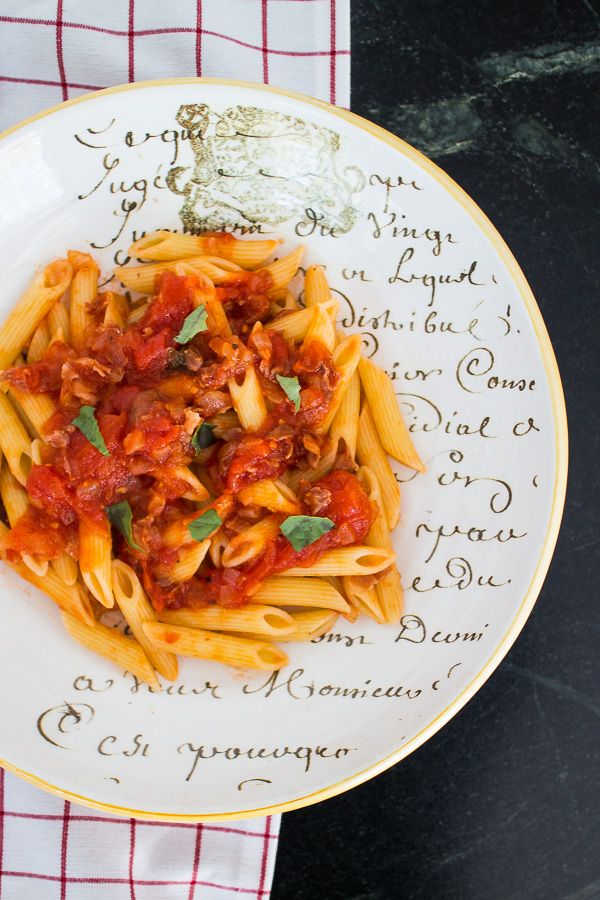
Bucatini all’Amatriciana

Bucatini Amatriciana

This typically Roman pasta dish was traditionally made with guanciale, but since that ingredient used to be very hard to find outside of Italy, and the Lazio region in particular, pancetta has became a common substitute. This is changing and guanciale can now be found at certain specialty food stores here in America. While you can still make a great Amatriciana with pancetta, if you are able to find guanciale, you should try using it at least once.

Made from cured pork jowl, guanciale is softer and has a higher ratio of fat than pancetta, resulting in a richer sauce. That being said, with either ingredient it is still my favorite pasta dish. So no need to get too caught up in being “traditional”.

Prep time: | Cook time: | Total time:

Serves 4


2 tblsp of olive oil
1/4 of a pound pancetta or guanciale, chopped
1 small yellow onion, chopped
2 cloves of garlic, chopped
1/4 teaspoon of red pepper flakes
1 28 oz can of imported Italian tomatoes
salt to taste
1 pound of bucatini pasta
1/2 cup freshly grated Pecorino Romano cheese

  1. Heat olive oil in large saucepan over medium heat. Add the pancetta or guanciale and cook, stirring often, until goldenbrown, about 10 minutes. Add the onion and saute until translucent, about 5 minutes. Add the garlic and red pepper flakes and saute until garlic is golden, about 1 minute longer.

  2. Crush tomatoes and add with juices to pan. Add salt pepper and a little water. Bring to a simmer and cook uncovered, stirring occasionally, until the sauce thickens, about 15 to 20 minutes.

  3. While the sauce is cooking, bring a large pot of water to a boil. Add 1 tablespoon of salt and the bucatini. Cook uncovered over high heat until al dente.

  4. Drain the pasta, then add the pasta and 1/4 cup of the Pecorino Pomano to the sauce in the saucepan and toss well. Transfer to warm serving plates and serve immediately, with the remaining Pecorino Romano on the side.

Read More

Pasta with Summer Squash

Pasta With Summer Squash

I feel like I have been beating the simplicity theme into the ground the past few weeks, but the fact of the matter is, this is how I cook in the summer. There are so many great seasonal ingredients that I look forward to all year, and I want to put them front and center in the dishes I eat. Plus, it’s too hot to cook anything too complicated or involved.

Zucchini and yellow squash are two of these ingredients that I look forward to so much. Sure you can get them all year round in the supermarket, but they are so much better when they are from your own garden or a local farm. This recipe comes from my Aunt Maria who is an awesome cook.

Pasta with Summer Squash Recipe

Serves 4-6

1 pound farfalle, penne or fusilli pasta
1/4 cup extra virgin olive oil
1 pound small squash such as zucchini or yellow squash, sliced thinly
1/4 teaspoon red pepper flakes
salt to taste
1/4 cup freshly grated Parmagiano-Reggiano cheese
4 large basil leaves, washed, patted dry and chopped

  1. Bring a large pot of salted water to a boil. Add pasta and cook uncovered over high heat.
  2. While pasta is cooking, heat olive oil in a large saute pan over medium heat. Add the squash, red pepper and salt. Cook stirring occasionally until squash is starting to soften about 8 minutes.
  3. When pasta is cooked to just under al dente reserve 1/2 cup of the pasta cooking water, then drain the pasta.
  4. Add the pasta, Parmagiano-Reggiano cheese, half of the chopped basil and the reserved cooking water to the pan with the squash, and stir together over the heat until well combined.
  5. Transfer the pasta to serving plates. Sprinkle with remaining basil and serve.
Read More

Lamb Chops Scottadito

Lamb Chops Scottadito

In Italian the word scottadito means burned fingers. This dish is named scottadito because the lamb chops are so delicious that you can’t resist eating them sizzling hot, straight from the grill and burning your fingers.

Serves 4

2 cloves garlic, finely chopped
2 tablespoons chopped fresh rosemary
1/4 cup extra-virgin olive oil
salt and pepper to taste
12 rib lamb chops

  1. In a small bowl stir together the garlic, rosemary, olive oil, salt and pepper. Place the lamb chops in a shallow dish and pour the marinade over them, turn the cops to coat both sides. Cover and refrigerate at least 2 hours.

  2. Start a fire in a charcoal grill or preheat a gas grill. Place the chops on the rack over high heat and grill turning once, 5 minutes per side for medium rare. The outside will be well seared with the insides still pink.

  3. Transfer to a warm platter and serve immediately.

Read More