
Butternut Squash Ravioli with Brown Butter and Sage
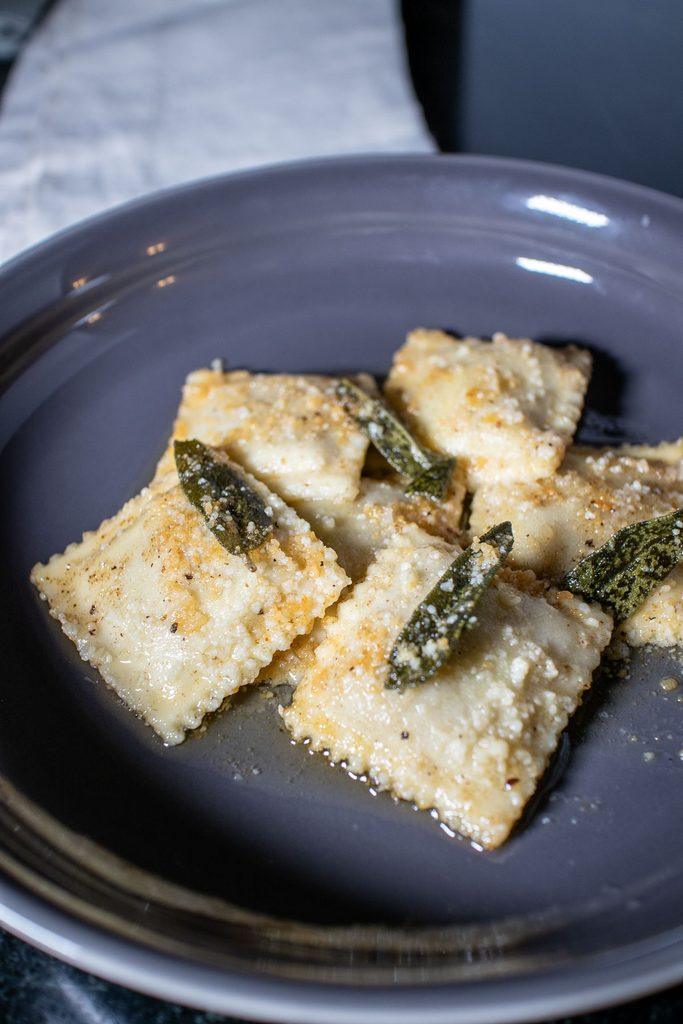
Fall is the perfect time for butternut squash stuffed ravioli, it is the pumpkin spice latte of ravioli. I love any ravioli tossed in brown butter and sage, but butternut squash makes a sublime partner for it. You don’t have to make your own ravioli at home (I didn’t), store bought ones are completely acceptable, and make this a great quick weeknight preparation.
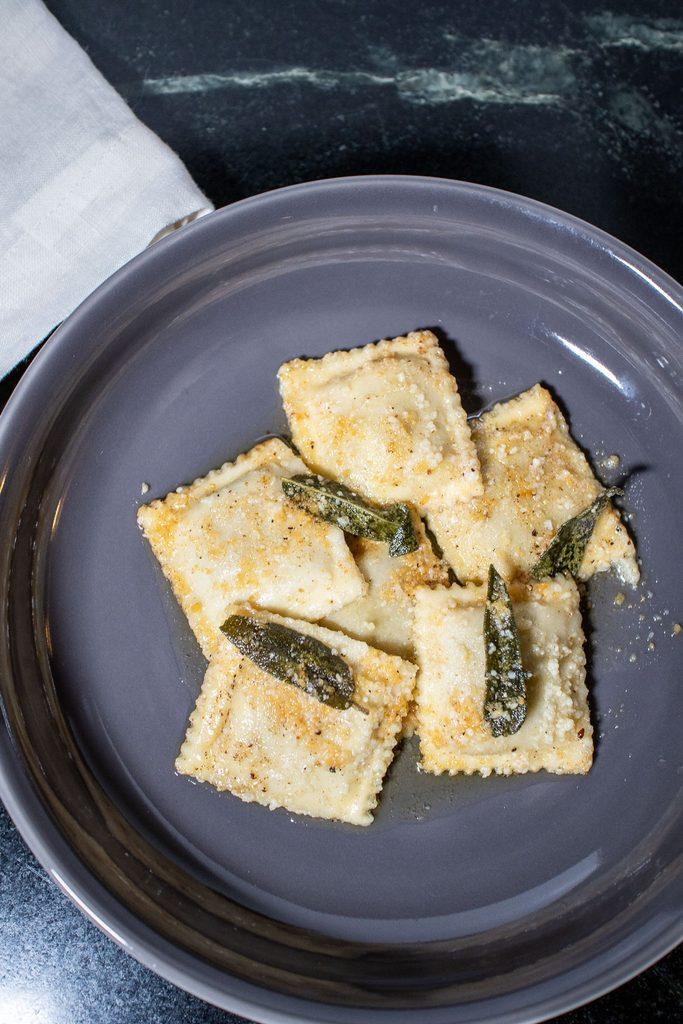
The Three Things That Matter
Brown the butter, don’t burn it. The difference between browned butter and burned butter is about 30 seconds and your full attention. You want the butter to melt, foam, and just begin to turn golden at the edges with a nutty aroma. The moment it starts to smell toasty, pull it off the heat. That’s the flavor. Burned butter is bitter and the whole dish goes with it.
Crisp the sage in the butter. Add the sage leaves while the butter is still melting, not after. They need time in the fat to crisp up and infuse the butter with their flavor. When the leaves are crisp and the butter is just browning, you’re done. Both happen together.
Use the pasta water. Reserve a quarter cup of the starchy cooking water before you drain the ravioli. When you add it to the pan with the butter, cheese, and ravioli, it emulsifies everything into a light sauce that coats the pasta properly. Skip it and the butter just pools on the plate.
Print
Butternut Squash Ravioli with Brown Butter and Sage
- Total Time: 20 minutes
- Yield: 4 servings 1x
Ingredients
- 8 tablespoons (1 stick) unsalted butter
- 12 fresh sage leaves
- 12 large butternut squash ravioli (store-bought)
- 1/2 cup freshly grated Parmigiano-Reggiano, plus more for serving
Instructions
- In a large sauté pan over medium heat, melt the butter. Once melted, add the sage leaves and cook until the leaves are crisp and the butter is just starting to brown at the edges. Remove the pan from the heat.
- Bring a large pot of generously salted water to a boil and add the ravioli. Cook until the ravioli float to the top. When ready, remove them with a slotted spoon and transfer to the pan with the butter and sage. Reserve 1/4 cup of the pasta cooking water before draining.
- Place the pan back over medium heat. Add the Parmigiano-Reggiano and the reserved pasta water. Cook, gently turning the ravioli, until well coated.
- Transfer to serving plates and serve with extra Parmigiano-Reggiano on the side.
- Prep Time: 5 min
- Cook Time: 15 min
Substitutions
- Ravioli. Frozen store-bought butternut squash ravioli is perfectly fine here. Fresh pasta from a good pasta shop is even better if you have access to one. If you want to make your own, the filling is squash, ricotta, Parmigiano, and nutmeg. Pumpkin filling is the closest thing to butternut squash, but this sauce works great with just about any ravioli, even your standard meat and cheese.
- Butter. Unsalted so you control the seasoning. If using salted butter, hold back on any added salt.
- Sage. Fresh only. Dried sage will not crisp and the flavor is completely different. If you can’t find fresh sage, skip it rather than substitute.
FAQ
Browning butter, beurre noisette in French, drives off the water in the butter and toasts the milk solids, creating a nutty, caramel-like depth of flavor that plain melted butter doesn’t have. It transforms a simple sauce into something that tastes much more complex than it looks. Just don’t go too far, burned butter is bitter.
No. The whole point of the sage in this dish is crisping the fresh leaves in the butter so they become almost like little chips with concentrated flavor. Dried sage won’t do that and the flavor is completely different. Fresh sage is worth finding.
About Phil
More Recipes
-
Beef | Pasta | Pork | Sunday Dinner
Sunday Sauce
-
-


