
Lingue di Pizza (Roman Pizza Tongues)
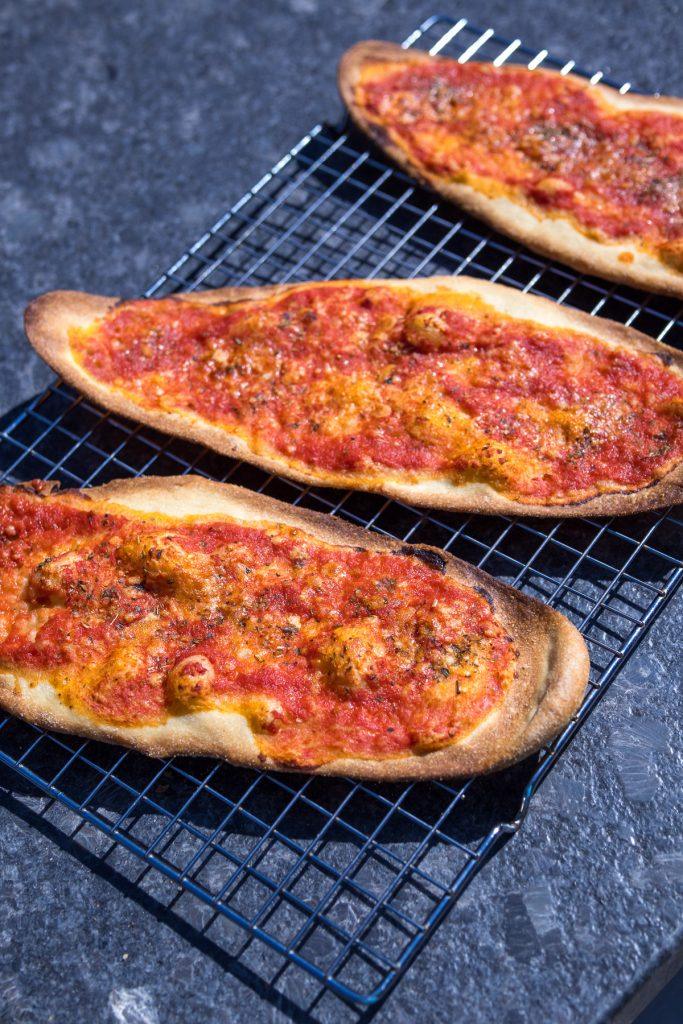
Lingue di Pizza are a street food snack that can be found in bakeries all over Rome. The word lingue means tongue, which describes the elongated shape. I have been seeing videos from Italy of people making these all over my social feeds, and I decided I had to try making them. My first question was whether they have yeast or not. As I did research I found that the answer is not straightforward. Sometimes they have yeast and sometimes not, but it seemed to me most of the bakeries put a little yeast in them.
I decided to try it both ways and see what I preferred. The no yeast version is quicker to make at home, no wait time for rising, and came out very good. However I found I prefer making them with a little yeast. The dough still comes out nice and crispy on the outside, but has a slight chew inside and a more complex flavor.
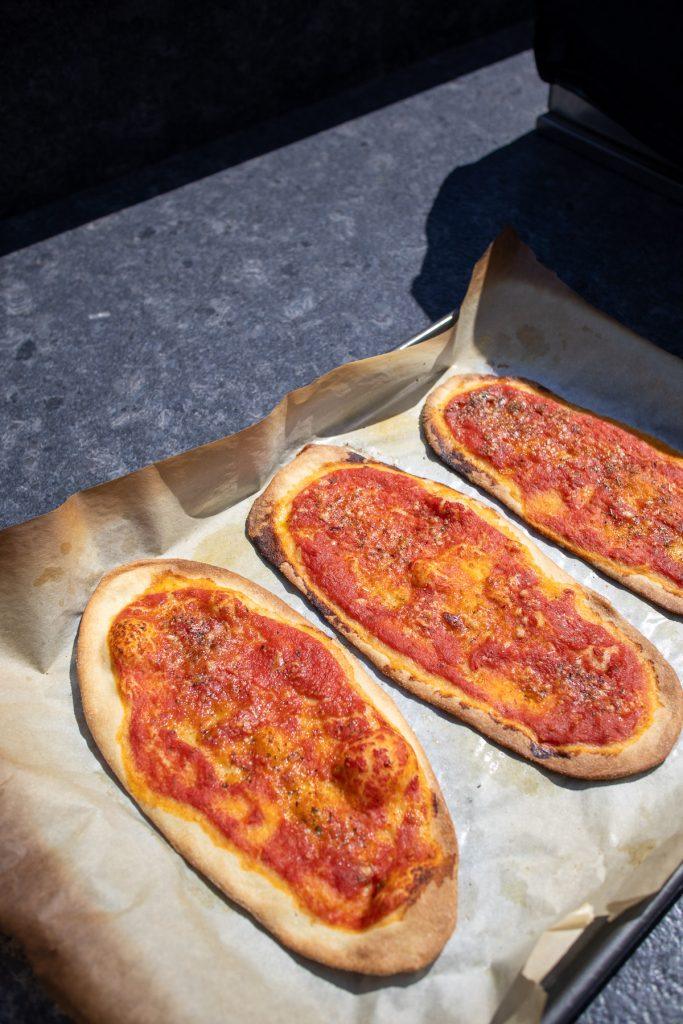
These are typically made with just the tomato sauce, a little dried oregano, and a drizzle of olive oil, but I like sprinkling a little pecorino romano cheese on top too. If you want to stay completely traditional, leave the cheese out. But I prefer it.
The Three Things That Matter
Use a small amount of yeast. This is what Roman bakeries do. A half teaspoon of instant yeast and an hour rise gives you better flavor and a slight chew inside while still getting crispy. The difference over no-yeast is significant.
Use San Marzano tomatoes. Puree them with a hand blender, add salt and olive oil. That is the sauce. Keep it simple. No cooking needed.
Bake at high heat. Crank your oven as high as it goes. You want the crust to crisp quickly and the sauce to concentrate. Watch them closely, they go from perfect to burnt fast at these temperatures.
Want to save this recipe?
Send the link to your Inbox, plus receive the latest recipes and updates.

Lingue di Pizza (Roman Pizza Tongues)
- Total Time: 1 hour 32 minutes
- Yield: 6 pieces 1x
Ingredients
Dough:
- 2 cups 00 or all purpose flour
- 1/4 cup semolina, plus more for Orolling
- 1/2 teaspoon instant yeast
- 3/4 cup water
- 1 tablespoon extra virgin olive oil
- 1 teaspoon of salt
Sauce:
- 1 can (28 oz) San Marzano tomatoes
- 1 tablespoon extra virgin olive oil
- Pinch of salt
Topping:
- Extra virgin olive oil for drizzling
- Dried oregano
- Grated pecorino-romano (optional)
Instructions
Make the dough:
- Combine the flour, semolina, yeast, salt, olive oil, and water in a bowl. Mix until a ball forms.
- Turn out onto a semolina-dusted surface and knead until smooth, about 5 minutes.
- Cover the bowl and let rise for 1 to 1.5 hours until doubled.
Make the sauce:
- While dough rises, add San Marzano tomatoes to a bowl. Puree with a hand blender until smooth. Stir in a tablespoon of olive oil and a pinch of salt.
Shape and bake:
- Preheat oven to its highest setting (500 to 550 F). Line a heavy duty baking sheet with parchment or oil it.
- Turn the dough out onto a semolina-dusted surface. Cut into 6 equal pieces. Sprinkle semolina on top of each piece and roll each one out with a rolling pin into a long, thin tongue shape.
- Transfer to the baking sheet. Spread sauce over the top of each piece, covering the edges. Sprinkle with oregano, drizzle with olive oil, and add grated pecorino-romano if using.
- Bake for 10 to 12 minutes until the crust is golden and crispy and the edges are slightly charred. I like to put it on the bottom rack for 5 minutes, then move it to the middle rack and put anothe baking sheet on the bottom rack to deflect the heat. This keeps the bottom from burning.
- Optionally, sprinkle with more pecorino after cooking.
- Prep Time: 20 minutes
- Rise Time: 1 hour
- Cook Time: 12 minutes
No-Yeast Version
If you want these in 30 minutes with no rise time:
Skip the yeast from the dough. Combine 2 cups all purpose flour, 1/4 cup semolina, 3/4 cup water, 1 tablespoon olive oil, and a pinch of salt. Mix until a ball forms, knead briefly, and rest for 10 minutes. Cut into 6 pieces, roll thin, top with sauce, and bake. You will get a cracker-like crust that is crispier and thinner, more like a flatbread. Good for a weeknight when you do not want to wait.
Substitutions
- Flour. Italian 00 flour or all purpose both work. 00 gives a slightly lighter, crispier result. Bread flour gives more chew. The semolina is important for flavor and crunch, do not skip it.
- Tomatoes. San Marzano are ideal. Any good quality canned whole tomato works. Passata (strained tomatoes) is also fine and requires no blending.
- Toppings. The traditional Roman bakery version is just sauce, oregano, and olive oil. No cheese. That is how you will find them in Rome. Pecorino romano is a common home addition and makes them even better. I made both versions: sauce only (traditional) and sauce with pecorino grated on before and after baking. Both are great.
Make Ahead, Storage, and Reheating
- Make ahead: Dough can be made ahead and refrigerated for up to 24 hours. Bring to room temperature before rolling.
- Storage: Best eaten the same day. Store leftovers in fridge covered for 2-3 days.
- Reheating: Reheat in a hot oven (400 F) for 3 to 4 minutes to re-crisp. Do not microwave.
FAQ
Lingue di pizza means “pizza tongues” in Italian. They are a Roman street food found in bakeries throughout Rome. Thin, crispy strips of dough topped with tomato sauce, olive oil, and sometimes pecorino or oregano. They are a quick snack, not a full meal.
Roman bakeries use a small amount of yeast for better flavor and texture. You can also make them without yeast for a quicker, cracker-like version. This recipe includes both options.
As hot as your oven goes. 500 to 550 F is ideal for home ovens. The high heat crisps the thin dough quickly and concentrates the sauce.


