
Sicilian Pistachio Pesto
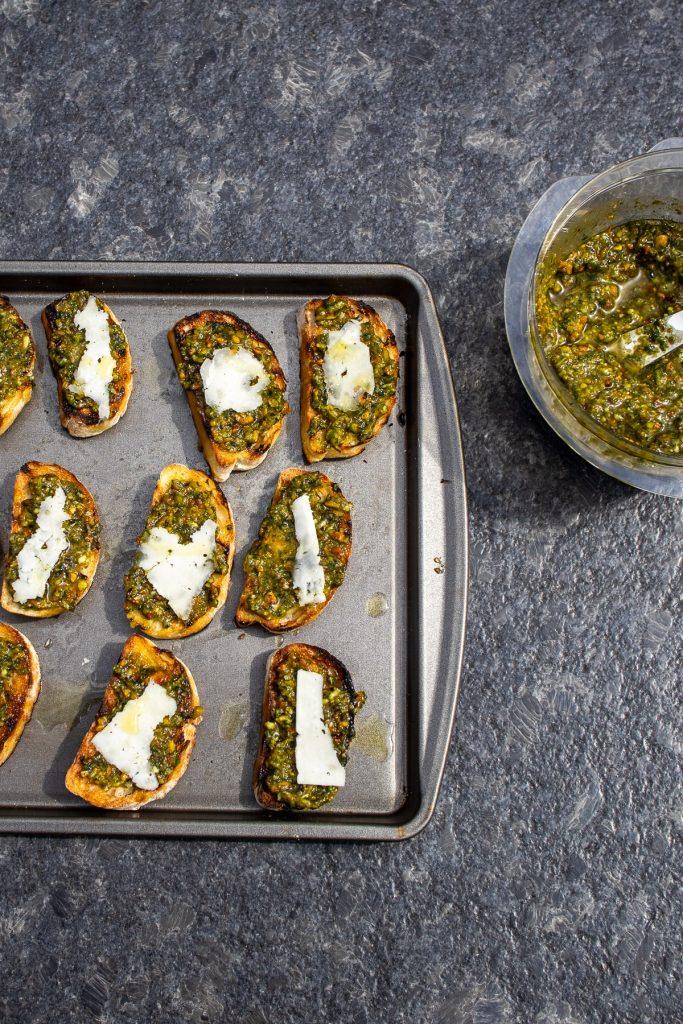
Here is another excellent Sicilian variation on pesto. This is different from the Trapanese Pesto that I featured last week in that there is no tomato, and it uses pistachios instead of almonds. Think of it as closer to Genovese basil pesto, but with pistachios rather than pignoli. The difference is that instead of just complementing the basil, as pine nuts do, the pistachio is the star here. Rich, nutty, and delicious. This pesto originates from Bronte, Sicily, a town known for its pistachios.
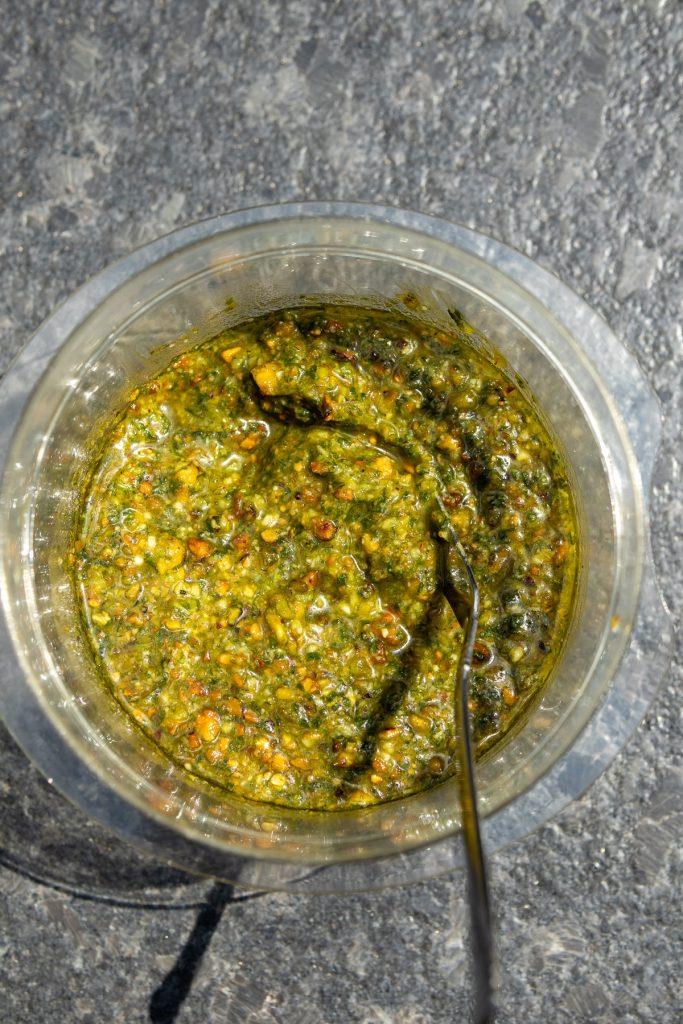
I have been putting this on everything for the past week. Here are some suggestions:
- On crostini. Grill slices of Italian bread or baguette, rub with garlic, spoon pesto on top, finish with a shaving of pecorino and a drizzle of olive oil.
- On pasta. Toss with spaghetti, penne, or casarecce (very Sicilian), thinning with a little pasta water until it coats the pasta nicely.
- On a sandwich. Spread on crusty bread with prosciutto. That is it. One of the best sandwiches you will make all summer. Been making this for my wife all week.
- On grilled chicken or fish. Spoon it over the top after cooking, same way you would a chimichurri.
- Stirred into scrambled eggs or on an omelette. A spoonful mixed in adds flavor without much effort.
- As a dip. Serve alongside raw vegetables or warm bread for an appetizer spread.
The Three Things That Matter
Use unsalted pistachios. Raw or roasted unsalted both work. Raw gives a lighter flavor, roasted gives a deeper nuttiness. Either way, make sure they are unsalted so you can control the seasoning.
Do not over-process. Pulse the pesto in the food processor. You want some texture, not a smooth paste. Small pieces of pistachio throughout give the pesto body and visual interest.
Stir the cheese in by hand. Add the pecorino after processing, not during. Pulse once or twice to break up big clumps if you want, but don’t overdo it. This keeps the pesto rustic with visible flecks of cheese rather than blending it into a uniform paste.
Want to save this recipe?
Send the link to your Inbox, plus receive the latest recipes and updates.

Sicilian Pistachio Pesto
- Total Time: 10 minutes
- Yield: About 1 cup 1x
Ingredients
- 1/2 cup shelled unsalted pistachios
- 1 cup fresh basil leaves, packed
- 2 cloves garlic
- 1/2 cup extra virgin olive oil
- 1/4 cup grated pecorino romano
- Salt and pepper to taste
Instructions
- Combine pistachios, garlic, and olive oil in a food processor or blender. Pulse until coarsely chopped.
- Add the basil leaves a little at a time, blending until mixed in each time. It should have some texture, not be completely smooth.
- Add the grated pecorino romano, salt, and pepper. Stir, or pulse a couple of times to blend in without creating clumps of cheese. Don’t over process at this point, you don’t want it too smooth. Set aside.
- Prep Time: 10 minutes
Substitutions
- Cheese. Pecorino romano is traditional. Parmigiano Reggiano works as a milder substitute.
- Pistachios. Raw or roasted unsalted both work. Roasted gives a slightly deeper, nuttier flavor. Avoid salted.
- Basil. Fresh only. Do not substitute dried.
Make Ahead, Storage, and Reheating
- Make ahead: Can be made a few hours ahead. Keep at room temperature.
- Storage: Refrigerate for up to 3 days. Press plastic wrap directly on the surface to prevent browning. Bring to room temperature before serving.
- Freezing: Freezes well for up to 2 months. Thaw in the refrigerator overnight.
FAQ
A pesto from Sicily that uses pistachios instead of the pine nuts found in Genovese pesto. It is richer and nuttier, made with pistachios, basil, garlic, pecorino, and olive oil. It originates from the Bronte region of Sicily, famous for its pistachios.
Pesto Trapanese uses almonds and fresh tomatoes. Pistachio pesto uses pistachios and no tomatoes. Both are Sicilian, but they are distinct sauces with different flavors. Trapanese is lighter and brighter. Pistachio pesto is richer and nuttier.
Yes. Roasted unsalted pistachios work well and give the pesto a slightly deeper, nuttier flavor. Just make sure they are unsalted. Avoid salted pistachios as they will make the pesto too salty.
Yes. It keeps in the refrigerator for up to 3 days. Press plastic wrap directly on the surface to prevent browning. Bring to room temperature before serving for best flavor and texture.


I love the idea of letting Bronte pistachios take center stage instead of using them as a background note. The tomato-free version sounds especially rich and versatile, and I can imagine it being fantastic tossed with fresh pasta.
I love the idea of letting Bronte pistachios take center stage instead of using them merely as a supporting ingredient. The rich, nutty pesto sounds like a wonderful tomato-free variation on traditional basil pesto.